

World Cup headlines and America’s 250th birthday raise a bigger question: Will we leave this nation better than we found it?
As America prepares to celebrate its 250th birthday, I find myself reflecting on a lesson my mother taught me long before I ever led an organization, built a business, or stood on a stage.
Whenever I left for a babysitting job, she would give me the same instruction:
“Leave that house better than you found it.”
At the time, I thought she was talking about picking up toys, washing dishes, and straightening pillows. Years later, I realized she was teaching me something much deeper. She was teaching me stewardship. She was teaching me responsibility. She was teaching me that every one of us has the opportunity—and obligation—to improve the places we touch.
That simple lesson followed me throughout my life. It shaped how I approached work, leadership, business, and service. Wherever I went, I tried to leave things a little better than I found them.
Recently, I spent nearly two weeks in Japan and was struck by the culture of responsibility, respect, and stewardship that seemed woven into everyday life. What impressed me most was not the technology or efficiency—it was how deeply people cared for the spaces and communities they shared.
That experience aligned with several stories making headlines around the World Cup.
After matches end and the crowds begin to leave, Japanese fans often stay behind. Carrying their now-famous blue trash bags, they clean the sections where they sat during the game. They collect cups, wrappers, and trash left behind by complete strangers. They do it after victories. They do it after losses. They do it whether cameras are watching or not.
The image resonates because it isn’t really about trash.
It’s about stewardship.
It’s about taking responsibility for something, even when it technically isn’t your responsibility.
It’s about leaving a place better than you found it.
As these stories have circulated around the world, I was struck by another headline much closer to home. A recent Pew Research Poll found that 59% of Americans believe our nation’s best years are behind us. What caught my attention was that the sentiment crossed political lines.
Americans may disagree on many things, but a growing number seem to share concern about the future.
As I reflected on those findings, I couldn’t help but wonder if we are asking the wrong question.
Perhaps the question is not whether America’s best years are behind us.
Perhaps the better question is whether we are willing to do our part to make our best years possible.
Too often we look to Washington, the media, our schools, our churches, or the next election to solve our nation’s challenges. While each has an important role to play, history suggests that lasting change rarely begins from the top down. More often, it begins when ordinary people decide to take responsibility for what has been entrusted to them.
For Christians, this principle should sound familiar.
Jesus taught that those who are faithful with little will be trusted with much. The Parable of the Talents reminds us that God expects us to steward what He has entrusted to us rather than bury it and wait for someone else to act. Scripture consistently points us toward responsibility, faithfulness, and action.
The question facing us today is not whether we have influence. The question is what we are doing with the influence we already have.
National renewal begins when individuals choose responsibility in the places God has entrusted to them—our businesses, our families, our churches, and our communities.
It begins when a business owner chooses integrity over convenience.
It begins when a leader invests in people rather than simply extracting results.
It begins when citizens care enough to improve the neighborhoods, workplaces, and communities around them.
It begins when enough people decide that responsibility belongs to them.
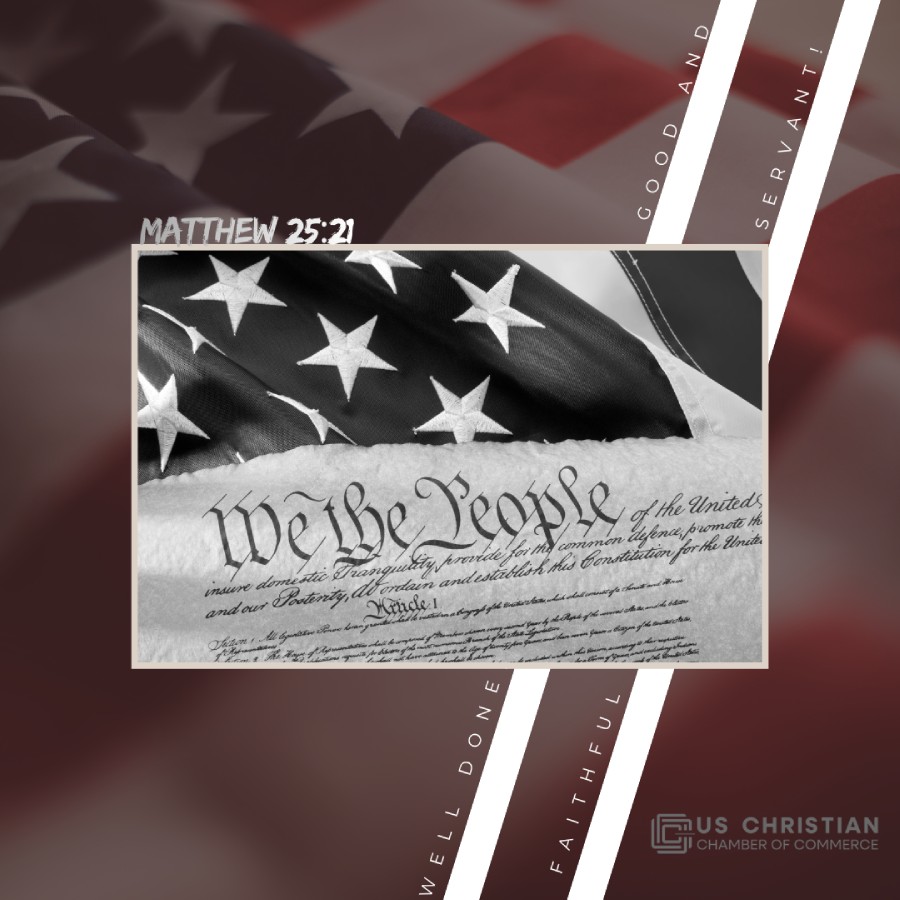
As we approach America’s 250th birthday, I remain hopeful—not because of any political party, economic forecast, or cultural trend, but because of the message at the center of the Christian faith.
The Gospel is a message of redemption. It is a message of restoration. It is a message that broken things can be renewed.
Millions of Americans profess faith in Jesus Christ. That means millions of Americans have access to a hope that transcends every challenge our nation faces.
At the time, my mother didn’t give much thought to the impact her simple instruction would have on me decades later. Yet as our nation prepares to celebrate 250 years of freedom, opportunity, and self-government, her words feel more relevant than ever.
Leave it better than you found it.
That’s not only good advice for a babysitter.
It’s a worthy aspiration for a nation.